
TECHNICAL / CONSTRUCTION GUIDE
Peshtemal Constructions: A Buyer’s Guide
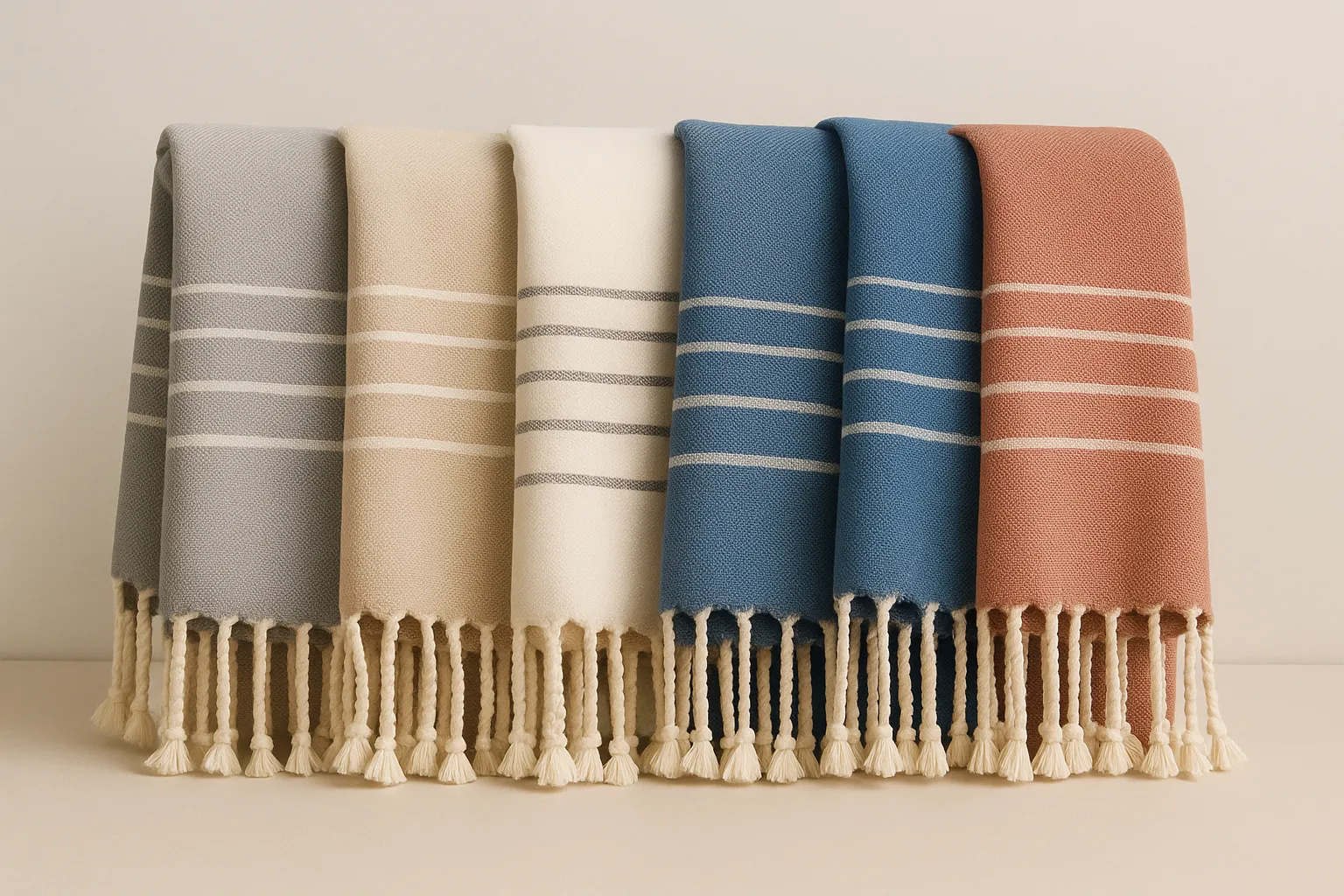
Four broad routes cover most B2B peshtemal and fouta briefs. The right choice depends on surface, reverse, absorbency, pattern definition, finished weight, colour planning and commercial scale.
COMPARE THE ROUTES
Construction changes more than appearance
Classic flat weave
Lightweight and compact, with a flat face and quick-drying character. Useful for beach, travel, hammam and retail programmes where packability matters.
Jacquard weave
The pattern is built through the weave rather than printed on the surface. Graphic definition, repeat, yarn planning and reverse appearance shape feasibility.
Yarn-dyed stripe
Colour rhythm is engineered through warp and/or weft yarn placement. Colour count and consumption can raise planning requirements and minimums.
Terry-backed
A decorative woven face paired with a looped reverse where greater absorbency and a fuller hand are required. Weight and drying behaviour differ from a flat weave.
Double-sided structures
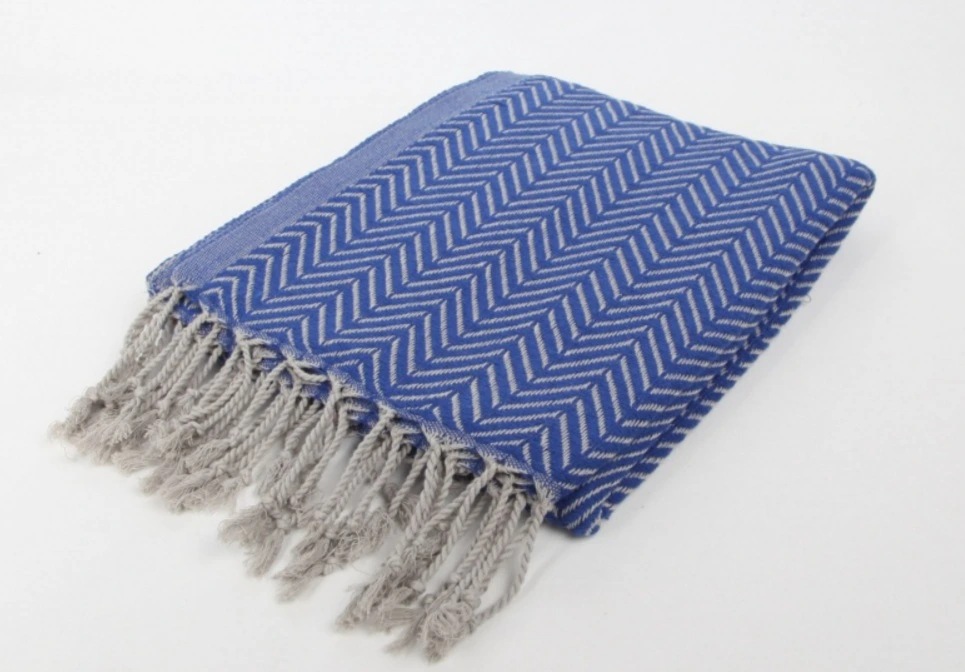
Face and reverse are intentionally related but may read differently. Herringbone and other reversible effects require careful colour and density control.
Application-specific programmes
Beach, spa, hammam, sauna and hospitality are buyer applications—not automatic constructions. The use case guides the technical choice.
SPECIFICATION CHECKLIST
Information a buyer should define
- Intended use: beach, travel, spa, hospitality or branded retail
- Finished dimensions: stated after finishing
- Weight: target GSM or piece weight with tolerance
- Face and reverse: flat, patterned, reversible or looped
- Colour route: stock direction, yarn-dyed plan or project-specific development
- Finishing: washing, handle, fringe and dimensional control
- Branding: woven label, care label, embroidery where suitable
- Packaging and quantity: per design, colour and destination
REFERENCE, NOT ASSUMPTION
Images start the conversation; specifications control production
A visual reference can communicate pattern scale, colour mood and presentation. It does not confirm yarn, density, size, weight, absorbency or commercial feasibility.
The double-sided herringbone reference shows why a construction-specific page is useful: the woven direction is clear, while every commercial programme still requires measurable confirmation.
COMMERCIAL EFFECT
Why minimums change by construction
From 500 pcs
The starting point for commercial production programmes.
Selected from 300 pcs
Possible where the construction, colour plan and production setup are technically feasible.
Higher minimums
May apply to special weaving, yarn-dyed colour plans, jacquard development and other demanding constructions.
CONSTRUCTION REVIEW
Turn an application idea into a production brief
Share intended use, construction direction, dimensions, weight, colours, quantities, branding, packaging and destination market.